
British Jazz and Its Future
Over the past decade, British Jazz has garnered acclaim for its creativity and innovation. Mike Gavin, our retail and media manager, explores the genre's 50-year journey and its future.
Jazz as a genre is intimately tied up with the technology of sound production. The 12” 33 ⅓ rpm album was designed in the mid-50s in part to create more space for jazz and classical music, and in turn encouraged the longer soloing and extended composing of modern jazz. Hard to imagine Coltrane thriving on 10” 78s. The point being that when it comes to recording and marketing music, technology and music delivery formats on the one hand and musical styles and forms on the other are closely related.
So as we enter a new era of music technology, with new ways of ‘consuming’ and listening to music, it makes sense to look back at the history of jazz - and of jazz in Britain in particular - to see what we can learn about how the two interacted in the past, and what we can learn that might help understand what’s happening now and what will change in the future.
Interest in historic British jazz is growing
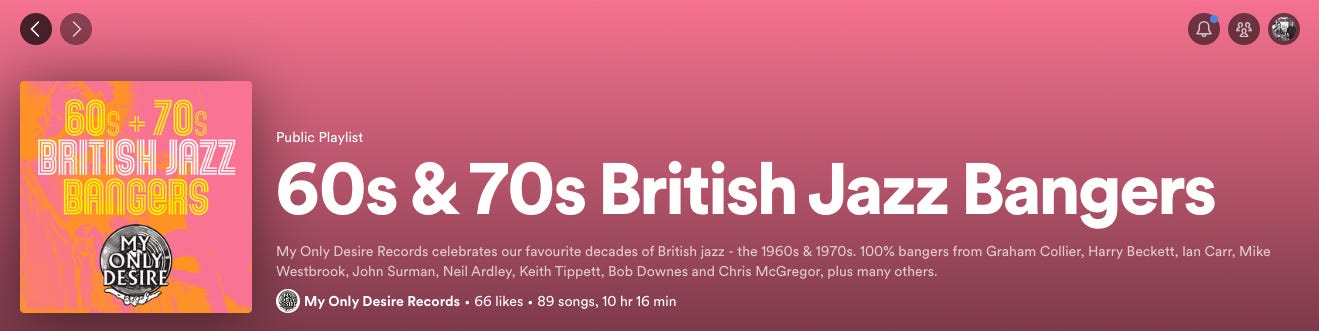
Jazz in Britain makes a good case study for two reasons. First, the new generation of British jazz musicians who have taken the music world by storm in the last decade have generated energy and created a global platform for their work by taking advantage of new technology. This is not so much a conscious revolution; the youth adopt the new tech as automatically as breathing - social media is a way of sharing life experience, connecting communities and spreading the word. The availability of music - almost all music almost all the time - though streaming platforms also acts as a way of breaking down the old boundaries of genre and tribe which always acted as barriers to extending the audiences for jazz.
Secondly, British jazz from the 60s and 70s is having a moment - there’s greater interest in the artists and the often difficult to find records they produced now than there was at the time! New books, reissues and forums for collectors to discuss the music have sprung up. Labels such as Jazz in Britain are providing a home for previously unissued sessions. Artists, from the virtually unknown Joy who recorded once in 1975 (Cadillac Records) to holy grail re-releases by Harry Beckett, Don Rendell and Ian Carr (by Decca) and others, are once again getting airtime. Just check out Richard Morton-Jack’s vast new tomb, Labyrinth: British Jazz on Record 1960-1975 for an indication of this current flowering of interest.
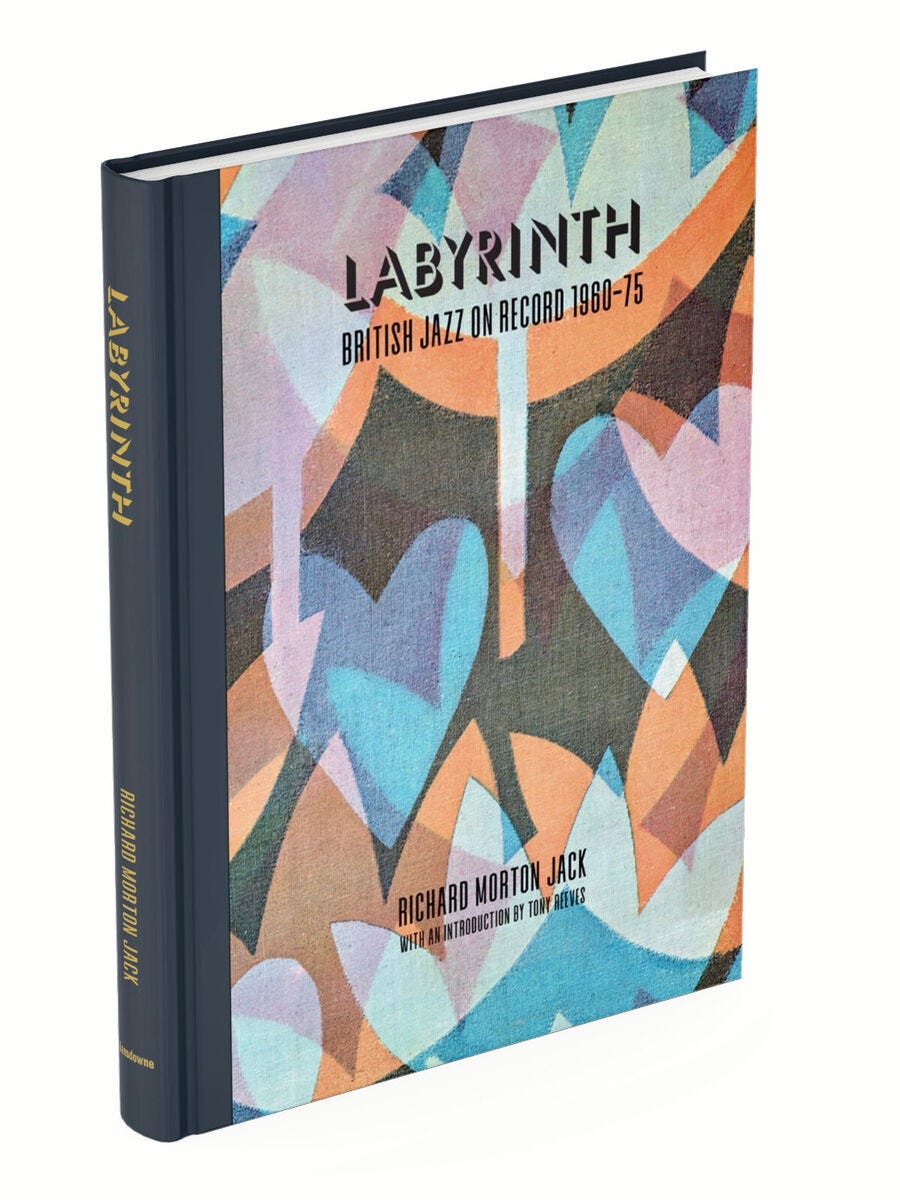
Richard Morton Jack - Labyrinth: British Jazz On Record 1960-75 (Lansdowne Books, 2024)
If we look back at previous eras in the development of British jazz we can see similar patterns at work. Whether that was the development of jazz collectives in the noughties - F-IRE Collective which birthed Polar Bear for instance - or the jazz dance scene of the 80s and 90s that inspired a generation of young black musicians, and brought jazz into contact with hip hop and house, the connection between communities and technologies is a common thread.
At the end of the 1960s and the beginning of the ‘70s similar powerful external forces were at work. The end of the cultural optimism of the 1960s, changing geopolitics and meta-economics all impacted on the UK jazz scene. Artists from a broad spectrum of styles had benefitted from the good times. Major record labels trying to be hip and jump on the new youth sub-cultural bandwagon opened their wallets and provided late ‘60s homes for unlikely progressive musicians such as Keith Tippett (Polydor), Mike Westbrook (Decca, RCA), the Brotherhood of Breath (RCA/Neon), Tony Oxley (CBS, RCA), and Stan Tracey (Columbia), and others. When asked why, Decca A&R Hugh Myndl replied: “Because we can, and therefore we should.”
But by the mid-70s, the scene was very different with the money migrating from jazz to prog rock, the oil crisis affecting vinyl prices and gradually the LP becoming less important than the pop single, the 12” and other formats coming in. By the late ‘70s the punk revolution had changed the way music was consumed and written about and jazz had become archaic and risible, the butt of jokes from the new wave of alternative comedians.
Rebirth came about with the reassertion of black culture in jazz. A youthful cohort alienated by the punk and indie movements, predominantly white and suburban, brought up with soul and disco music and open to developments in black jazz that were often spuirned by the cognoscenti and gatekeepers in the music - the jazz funk of Herbie Hancock, the smoother styles that mirrored lovers rock in reggae: an urban aesthetic that suited the new clubs that were appearing at the time. DJs such as Paul Murphy and Gilles Peterson reintroduced a heady brew of hard bop, latin and fusion styles to a mixed and young audience who wanted to dance.
This brief character sketch of British jazz over the past 50 years demonstrates that in one sense nothing is new. Jazz is a ‘niche’ genre that makes demands of its audience. Unlike pop music that thrives on continual and rapid evolution, jazz looks back to a deep past and progresses more slowly. Much of jazz is instrumental and lacks the immediate emotional connection of a lyric. And, fundamentally, jazz has been seen by the music industry as a minority interest: uncommerical and difficult to market. Every generation or so there’s an uptick in interest and sales, and often this comes with a change in the technology of listening.
British jazz in particular has been beset through the years with tribalism and partisanship, from the ‘dirty bopper’ slur of the 1950s traddies, to the marginalisation of the ‘free jazz’ and improvising musicians of the 70s and the ‘jazz, nice’ cultural perceptions of the 90s and naughties. But now there are signs of a real step change in the way British jazz is perceived and marketed.
London’s Nu Jazz scene invasion:
https://www.nytimes.com/2017/08/29/arts/music/jazz-refreshed-london.html
For the first time in 2023 a jazz act - although whether ‘jazz’ is an appropriate label any more is open to debate - won the Mercury Prize. Long seen as the genre sacrificial lamb of the awards, jazz artists were not even the bridesmaids at these industry nuptials - more like the embarrassing relative at the back of the church. But Ezra Collective, an example of the new wave of British jazz musicians, burst that bubble. The industry is sitting up and looking on. The youth are listening to jazz. Young artists are getting contracts with major labels. But it’s not this that’s changed - we’ve seen this before in the late 60s, the early 80s and the naughties.
Even the Guardian gets the message:
https://www.theguardian.com/culture/2021/nov/08/the-beat-goes-on-the-new-british-jazz-messengers
The real change is in the way these young musicians are reaching their audience. No longer dependent on ‘gatekeeper’ media, major label investment or specialist retailers, bands like Ezra can deal directly with their global following, and by savvy use of socials and the other benefits of connected technologies, spread the word without having to concern themselves with genre limitations. These changes - in the way people listen and the way artists market music - are momentous. They are sometimes painful. Old ways of doing things lose traction before the benefits of the new ways are established. Technology is moving faster now than it did in the past and there is uncertainty where it will lead - not just in Britain or in jazz. For many artists born too early to easily embrace these changes the reaction is often to look back fondly to some (imagined) golden age of British jazz. It may be that changes in the (near) future will make some of the traditional ways of being a musician unviable.
But the world spins and life carries on. Mark Lockheart, who started his career in the 1980s and has experienced a number of these changes first hand has a new album, Smiling, out this year. It’s a beautiful piece of work, his compositions played by some of the cream of British jazz musicians, that harks back to those British jazz heroes of 50 years ago while simultaneously expressing Mark’s life experience and being very much a product of today. It’s a classic work of British jazz, in fact. Mark’s career has embraced a number of the periodic jazz upturns - as a member of Loose Tubes in the 80s he helped revolutionise the way jazz was perceived. As a member of Polar Bear he helped bring the music to another audience through their then ground-breaking Mercury nomination. He’s recognised as a great soloist, composer and teacher. Let’s hope that, in the future, Smiling will be looked back on as part of another revolution - in the way Mark’s music is made available to a new global audience and as a celebration of 50 years of British jazz.
An excellent summary despite the curious statement ‘Much of jazz is instrumental and lacks the immediate emotional connection of a lyric’ given that lyrics would seem to disrupt the emotional connection in much of jazz…